
A Simple Test/Exercise For Thoracic Rotation

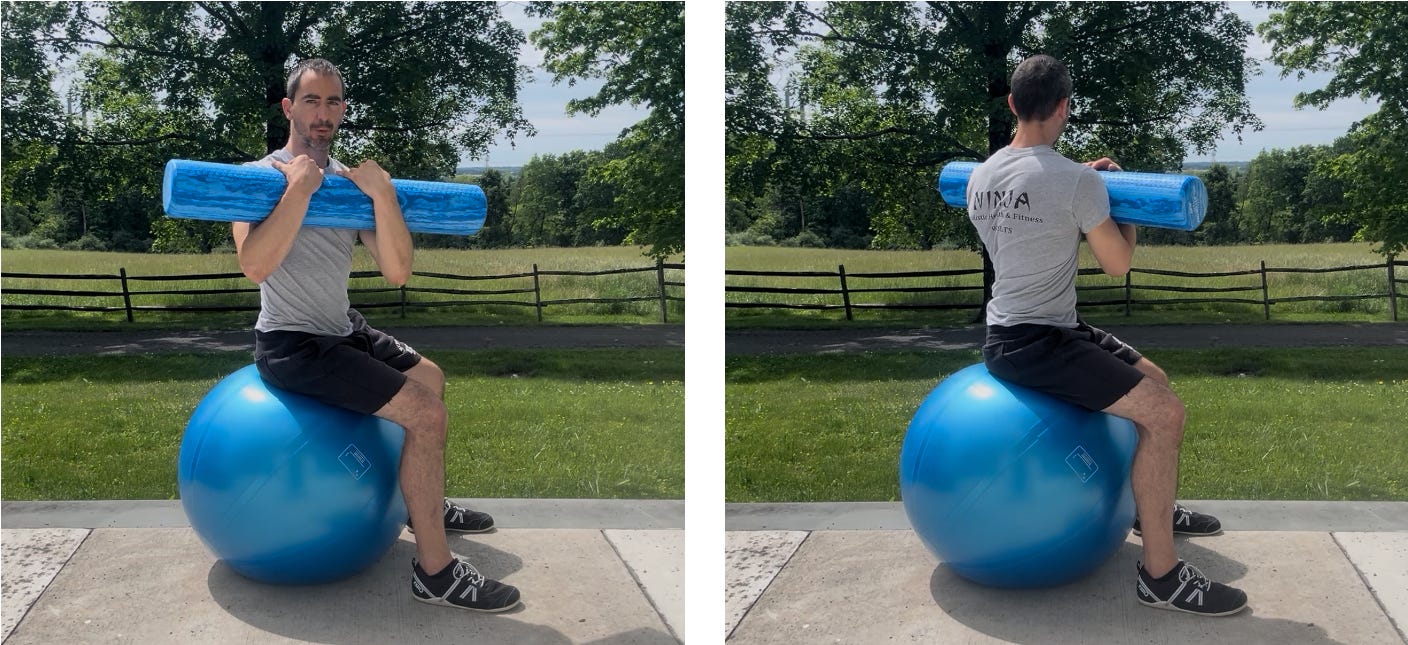
Today’s Topic Highlights:
The ability of the torso to twist, known as thoracic rotation, strongly influences our overall movement capacity.
Loss of thoracic rotation forces the lumbar spine and shoulders to compensate for the lack of mid-back mobility.
Much of the low back discomfort experienced by older folks can be attributed to stiffness in the mid-upper back area.
A simple way to test, and also improve, your thoracic rotation is with the seated thoracic foam roller twist.
Done consistently over time this can produce a subtle increase in spinal range of motion that will have a very positive impact on your movement capacity.
Daily life revolves around the body’s ability to move properly. The ability of the torso to twist, known as thoracic rotation, strongly influences how we move. Thoracic rotation is a key facilitator of fluid, pain-free body movement. Everyday tasks like gardening, walking, and playing with grandkids hinge on this ability. You can test your ability to rotate, and even improve it, with the exercise in this article.
There are 12 vertebrae in the thoracic spine, each with facet joints and discs. These spinal segments form a continuous, fluid structure that allows for 3-dimensional movement.
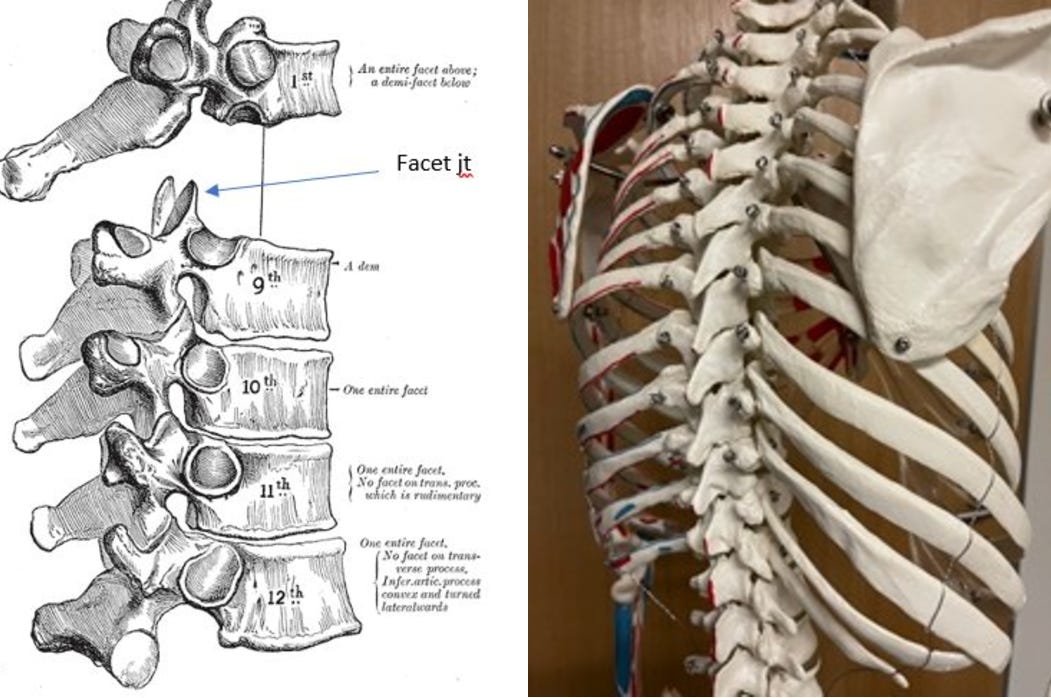
Loss of thoracic rotation forces the lumbar spine and shoulders to compensate for a lack of mid-back mobility. Reduced mobility in the thoracic spine creates abnormal patterns of trunk movement.1 This often leads to low back pain, as well as neck pain and shoulder impingements. Much of the low back discomfort experienced by older folks can be attributed to stiffness in this area.
One of the reasons why so many golfers suffer with chronic or intermittent back pain is because their thoracic spines are immobile. They attempt to drive golf balls with great force through a spine that no longer rotates correctly. Their upper back muscles are stiff and inflexible due to years of seated office meetings, long plane flights, and stooped over computer posture. Because of this, their bodies have no choice but to overuse the lumbar spine (lower back) to pick up the slack.
A simple way to test your thoracic rotation is with the seated thoracic foam roller twist. The best part of this test is the fact that it doubles as a corrective exercise. The very same “test” for determining how well you can rotate also conveniently serves as an “exercise” for reestablishing lost range of motion. The more you do it, the better. All you need for this is a foam roller. If you do not have one, a dowel rod or PVC pipe will also work.
Follow the steps below to perform the seated thoracic foam roller twist.
1. Starting position
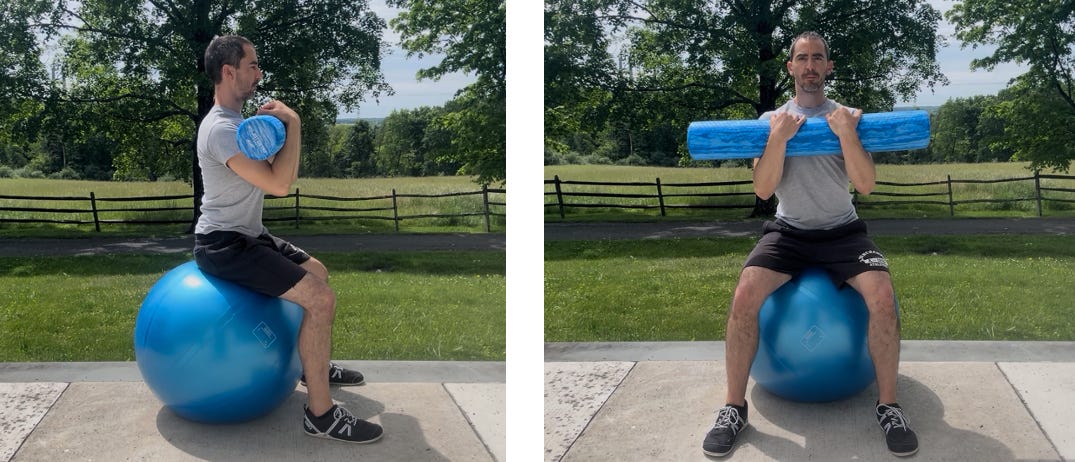
Begin in an upright seated position with a foam roller cradled in the arms. Keep the roller pressed firmly against your chest at all times. This will prevent the arms from reaching to the side during the exercise, thus giving a false sense of thoracic rotation. Your upper back muscles should be doing all the work.
Also, make sure your legs are completely stationary as you twist. Do not let the knees shift around as you rotate, for the same reason just mentioned.